Almost every child goes through an intense "dinosaur phase" between ages 4 and 8. They can pronounce Parasaurolophus and Ankylosaurus with flawless accuracy, yet most commercial games reduce these prehistoric creatures to roaring monster gladiators attacking each other in laser battles. How can we channel this raw fascination into genuine geological and biological understanding?
Why Chronological Context Matters in Early Paleontology
In typical cartoons, a Tyrannosaurus Rex is shown sharing a cave with a Woolly Mammoth and early cavemen. In scientific reality, the T-Rex lived closer in time to modern humans than it did to the Stegosaurus!
Teaching children about dinosaurs is the greatest gateway to understanding deep geological time, plate tectonics, fossilization, and evolution. When children understand the timeline of our planet, they develop a profound reverence for the living world today.
The 4 Prehistoric Eras Every Child Should Discover
1. The Fiery Birth of Earth (4.5 Billion Years Ago)
Before any dinosaur walked the earth, our world was a glowing sphere of molten rock and bubbling magma rivers. As steam cooled into clouds, centuries of rainfall formed the first primitive oceans.
2. The Triassic Awakening (250 Million Years Ago)
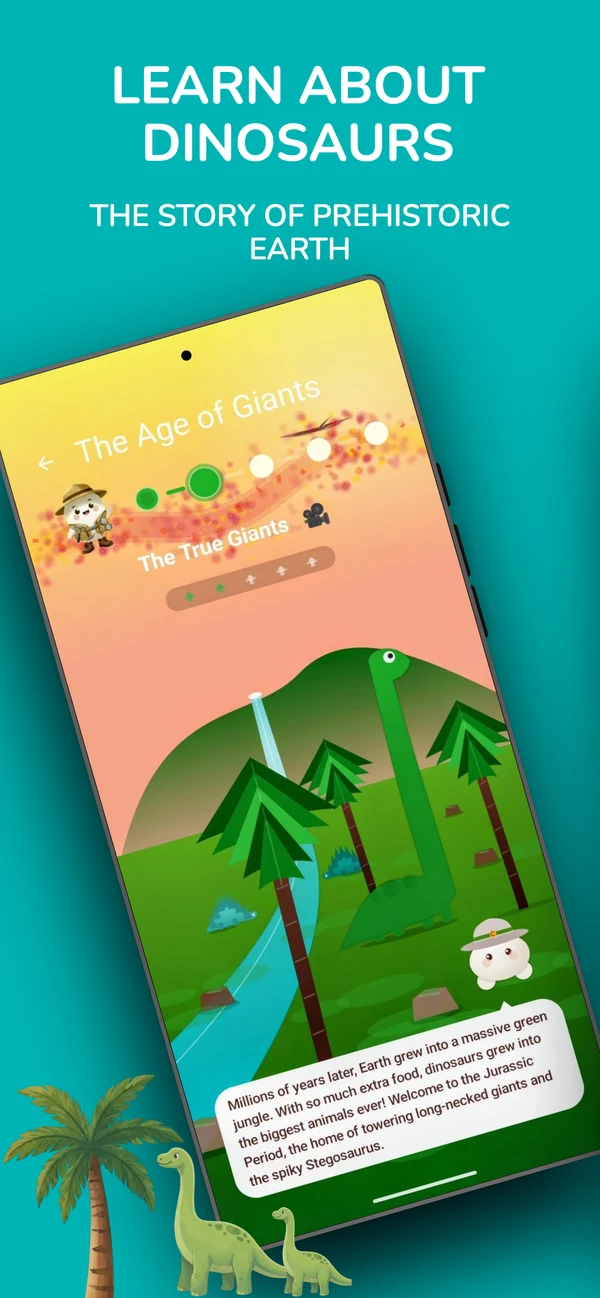
All continents were welded together into one enormous supercontinent called Pangea. The earliest dinosaurs were slender, agile creatures sharing the earth with prehistoric reptiles and towering ancient ferns.
3. The Jurassic & Cretaceous Giants (200 to 66 Million Years Ago)
As Pangea rifted apart, lush tropical forests fed gentle long-necked sauropods like Brachiosaurus and armored defenders like Triceratops. Children learn how herbivores and carnivores coexisted in delicate balance.
4. The Frozen Ice Age (2.5 Million Years Ago)
Long after the dinosaur era ended, massive ice sheets crept across the continents. Children meet woolly mammoths, saber-toothed cats, and see the earliest human handprints preserved on cave walls with mineral pigments.
How Little Discoveries Teaches Prehistoric Science
In our chapter, The Story of Our Planet, we built an immersive journey through Earth's ancient history for young explorers:
- Tactile Fossil Excavation: Children step into the role of field paleontologists. Using intuitive finger-brushing gestures, they dust sedimentary rock away to unearth fossil footprints and articulated dinosaur skeletons, then inspect them with the in-game magnifying lens.
- The 4 Deep-Time Eras: Journey through the molten proto-Earth, early Cambrian seas, the Mesozoic dinosaur landscape, and the frozen Ice Age with gentle, narrated storytelling.
- Interactive Cave Art Discovery: Step inside a dark Ice Age cavern and tap to illuminate ancient handprints, running horses, bison, and woolly mammoths discovered by early human artists.
- Printable Prehistoric Coloring Gallery: Directly print museum-quality coloring sheets of dinosaur jungles and mammoth mountain passes for hands-on coloring with physical crayons at home.
- Hands-On Pangea Companion Mission: Guided offline craft instructions teach kids how to draw, cut, and fit together cardboard continent pieces to understand continental drift on the kitchen table.
Freeze small toy dinosaurs or shells in containers of water in your freezer. Once frozen solid, give your child spoons, droppers with warm water, and a pinch of salt to carefully chip and thaw the prehistoric creature free — just like paleontologists unearthing a woolly mammoth from Siberian permafrost!
Unearth Earth's Ancient Wonders with Your Child
Explore prehistoric eras, excavate fossils, and walk with mammoths on Google Play and Apple App Store.